
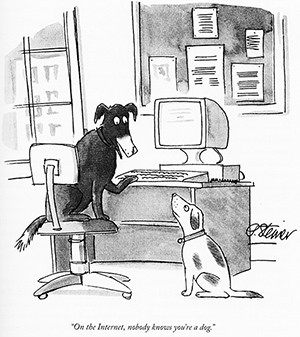
With the advent of the internet, there was a belief that it would be a powerful tool for making new friends. In the early days of the internet, Bulletin Board Systems (BBS) and other platforms provided an opportunity to connect with people from all corners of the world and learn about different cultures. The problem is that the internet was conceived with anonymity at its core, so we could not know who we were talking to. As a (back then) famous cartoon by Peter Steiner says: “On the internet, nobody knows you’re a dog”
Over time, the internet has evolved significantly, and the way we communicate and interact with others has changed. Social media platforms like Facebook, Twitter, and Instagram have become the norm for staying in touch with friends and family, as well as making new connections. But they were still allowing anonymous users. The results? Tons of fake profiles, stalking, harassment, and trolling.
Facebook attempted to address this problem by implementing a real-name policy for user profiles. The idea was to make the platform safer, but in practice, it did not work, as evidenced by the proliferation of misinformation campaigns on the platform.
Despite the prevalence of fake users, trolls, stalking, and other problems, people continue to use social networks to find new friends and maintain existing relationships. This is largely because there are no viable alternatives available, forcing people to compromise their privacy and expose themselves to intrusive advertisers. Here’s the deal: Social media sold to us that they were connecting people, helping us make friends and stay in touch with our friends. But that’s a farce.
The truth is that social media companies convinced us to post publicly about ourselves, promising us that our friends would see what we’ve been doing and engage with our posts. This is such unnatural behavior. Would you broadcast in real life about the dish you ate? Or about the workout you did? Aside from narcissists, a regular person has no need to brag about mundane things. Now, influencers and brands do want to reach prospects and customers. Facebook and others might’ve started as Social Networks, but they morphed into Social Media companies. Emphasis on Media.
Do you see where I’m getting here? By pretending to still be social networks (or at least not being transparent they are media companies) those companies are in fact hiding their real agenda. They have successfully tricked us into becoming broadcasters, so we create enough organic posts to dilute the ads they sell. Basically, they normalized this weird behavior of broadcasting our private lives so that they could sell more ads. And by making this habit of oversharing mainstream, they also grabbed tons of data from us, which they passed to advertisers so they could sell more ads.
How many times have you posted something legit: like your kid’s graduation, and not many people engaged? Maybe it’s because they don’t care. Or, maybe, just maybe, is because they didn’t see your post at all because your post got scrambled into a torrent of garbage ads.
It’s time to be anti-social. It’s time for us to stop pretending that the pros of the current model of social media outweigh the cons. Teen depression, election influence, radicalization. The list of externalities from social media is immense, and the problems they cause to our society are profound.
Meta anticipated this trend and hedged their business by acquiring WhatsApp years ago. Zuckerberg is a visionary and realized that the days of social networking are ending. As he said in 2019: it’s a switch from the town square to a more private “living room”. The problem is that Meta shouldn’t be the one guiding this change. They have too much at stake to drive anything meaningful.
To solve for making new friends, what we need is a brand new model, a tool to help us find new people with shared interests with us. It’s more like dating apps than social media. Once we find those people, we can engage in private conversations using whatever service we want to.
We still have the problem of maintaining friendships. I bet you lost contact with good friends. I, for one, have so many friends I lost contact with, people I love and care about much. I moved countries, there’s the time zone difference, work, and taking care of kids. Ultimately, life got in the way, and I couldn’t keep those friendships alive.
So here’s my concept: Friend Relationship Management (FRM). Simply put, FRM will create prompts to prevent your friendships from going stale. It would provide alerts and nudges to promote conversation starters with your friends, from things you both like. It would suggest activities you could do together. Again, you would be in charge of picking the communication service you want to use to talk to your friend. Maybe you want to call them, who cares.
I’m considering building this company. Should I? Is this a stupid idea? Let me know your thoughts! Also, let me know if you want to get involved!
Update: I AM starting a business around this concept. It’s called Grape and you can join our waitlist here!
 Gustavo Guida